
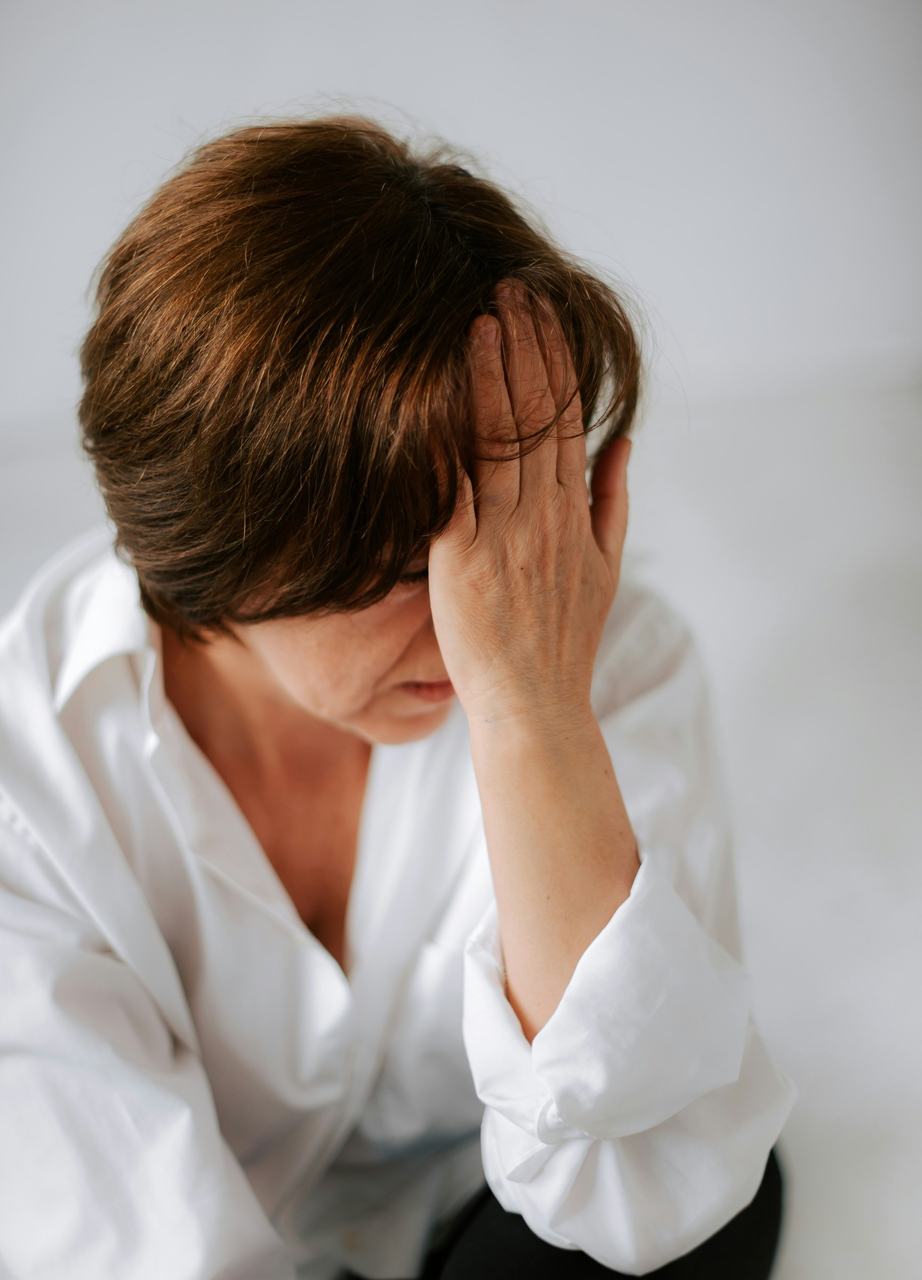
From the outside you seem on top of things. Work, home, children, deadlines.
Inside — chaos, living on the last minute, exhaustion and a feeling that others cope somehow “more easily”.
Increasingly it turns out that for many adult women ADHD looks like this. Not the “movie” ADHD of running around the classroom. Quiet, hidden, dusted with perfectionism and guilt.
I see a person as a whole — their history, biology and the world they try to function in. From that perspective I will tell you how ADHD in women can look in practice: a different presentation, very similar consequences for mental health.
Why are we even talking about ADHD in women?
For years ADHD was mainly associated with a boy who disturbs class: fidgeting, blurting out, having “behavior problems”. Yet more research shows that in girls and women the presentation can be different — and that is why diagnosis is often late.
Systematic reviews and large sex‑difference analyses say clearly:
in women a predominantly inattentive subtype is more common,
hyperactivity and impulsivity symptoms are weaker, more “internal”,
difficulties more often manifest indirectly as depression, anxiety, burnout, eating disorders, relationship problems.
The average age of ADHD diagnosis in women is several years higher than in men — in one study the difference was almost 5 years.
That’s a lot of time during which you may think “I’m lazy, disorganized, too sensitive” instead of receiving a solid message: “Your brain works differently — let’s see how to help.”
How does ADHD in women look day to day?
1. Symptoms that don’t shout
In women with ADHD inattention more often dominates than the “typical” hyperactivity.
In practice this can mean e.g..:
difficulty organizing daily tasks (“something is always slipping my mind”),
starting many tasks at once and trouble finishing them,
being late or arriving “too early” to make sure you’re not late at all,
losing things, forgetting important deadlines, payments, emails,
becoming distracted during a conversation or reading (you return to the same paragraph several times).
Added to this are:
emotion regulation problems — easy tearing up, quick anger outbursts, difficulty “switching off”,
stimulus overload — noise, clutter, constant “mum, mum”,
energy fluctuations — periods of hyper‑focus and operating at 200%, followed by a “crash” and total exhaustion.
All of this is easy to attribute to “character” or “tough times”.
But when these patterns have been with you since childhood and genuinely hamper life — it’s worth taking a closer look.
2. Masking — “organized on the outside, falling apart inside”
Research and consensuses on women with ADHD emphasize the phenomenon of masking — hiding symptoms through various survival strategies.
How this can look for you:
a curated calendar, to‑do lists, apps — not because you love productivity, but because without them everything would fall apart,
perfectionism — revising tasks multiple times, overchecking emails, polishing presentations late into the night,
excessive responsibility — taking too much on because only then do you feel that “somehow” it will hold together,
enormous effort so that no one sees how hard you are trying to “keep everything in check”.
On the outside you may appear very competent, conscientious, “the one you can rely on”.
Inside you pay a price: chronic tension, fatigue, burnout, and sometimes depressive episodes or panic attacks.
3. The same consequences as in men — and often several additional ones
ADHD in women is “quieter” in symptoms, but the consequences can be just as serious — or even greater, because social pressure is added: you have to be on top of things, pleasant, groomed, available.
Research describes in women with ADHD e.g..:
increased risk of depression and anxiety disorders,
higher risk of occupational burnout,
more frequent eating disorders and body image problems,
relationship difficulties (e.g. impulsively entering and leaving relationships, difficulty with boundaries),
lower self‑esteem, a sense of “constant failure”,
greater risk of substance use problems in some women.
So: the symptom picture is different, but an unsupported ADHD brain can lead to very real problems in mental health, work, relationships — regardless of gender.
Why is diagnosis of ADHD in women so often delayed?
1. Criteria were written mainly based on boys
Historically diagnostic criteria were based on observations of boys — loud, hyperactive, “naughty”.
A girl who stares out the window in class, hands in work with mistakes or says “sorry, I didn’t have time” was rarely associated with ADHD.
That’s why many women say:
“I had good grades at school, so it can’t be ADHD?” — and only when probed does it turn out that behind those grades were: nightly catch‑ups, huge stress, living on the edge of deadlines.
2. The stereotype of the “neat, put‑together” woman
Culture has expectations of women: you should be organized, caring, manage your own and others’ emotions.
If your brain works differently, you often try to compensate — at your own expense.
Research and solid clinical reviews describe that women with ADHD more often than men:
mask symptoms through perfectionism and excessive control,
take on too much so “no one notices”,
internalize difficulties — instead of “I have ADHD” it’s more “there’s something wrong with me”.
This is another reason why diagnosis appears only when something breaks: depression, burnout, a relationship crisis, the sudden “I can’t cope anymore”.
3. ADHD is mistaken for depression, anxiety, burnout
Symptoms of ADHD in women very often overlap with other disorders:
chronic fatigue,
a sense of overload,
fear of “not coping”,
mood dips.
As a result many women are treated for years for:
depression,
anxiety disorders,
“occupational burnout”,
…but no one examines how you functioned as a child, how your attention, impulsivity, organization were historically.
This does not mean that an ADHD diagnosis “erases” those diagnoses — they often coexist.
But only when ADHD is considered in the whole picture can you see why classic therapy or medications “only helped a bit”.
Diagnosis of ADHD in women — how it can look in practice?
Here very briefly, because I described the whole process in more detail in a separate article about diagnosis.
A reliable diagnosis is based on:
a detailed interview — from childhood to adulthood (school, university, work, relationships),
assessment of functioning in several areas (home, work, relationships),
structured diagnostic tools (e.g. DIVA‑5, ASRS) conducted by a specialist,
exclusion of other causes of symptoms (thyroid disease, deficiencies, sleep disorders, addictions, other mental disorders).
Under good standards, diagnosis does not end at “yes/no” but also includes:
discussion of coexisting problems (depression, anxiety, personality disorders, trauma),
a joint decision on next steps: psychoeducation, therapy, lifestyle changes, possible pharmacotherapy.
This is always an individual decision — made after a calm conversation, taking into account your history and life plans.
Treatment of ADHD in women — what do the guidelines say?
International guidelines and consensuses on ADHD (NICE, World Federation of ADHD, expert consensus on women) are quite consistent here:
Psychoeducation and support — understanding how your brain works, what is a trait and what is a symptom, what your strengths are.
Changes in daily functioning — working with a calendar, daily structure, breaks, sleep, exercise, stimulus management.
Therapy — most often in the cognitive‑behavioral approach or related ones, but adapted to the fact that you have ADHD (shorter modules, concrete tasks, working with examples).
Pharmacotherapy — when symptoms are severe and significantly impair functioning; medication choice, dose and monitoring are agreed individually with the doctor.
If you are a woman, it is additionally worth considering: menstrual cycle, pregnancy, postpartum, perimenopause — because hormones can influence symptom severity and response to treatment.
There is no single “ideal strategy” for all women with ADHD.
There is, however, the possibility to devise a plan that takes you as a whole into account — your roles, values, health, body and how much energy you have for change.
FAQ — questions I often hear in the clinic
Does every “busy” woman have ADHD?
No. ADHD is not a label for “modern life on the go”.
It is a neurodevelopmental disorder — symptoms are present from childhood, affect several life areas (school, home, work, relationships) and are not solely due to current stress or overwork.
Does an ADHD diagnosis change anything if I already have depression/anxiety?
It can change a lot in how treatment is planned: choice of medications, therapy formats, priorities in self‑work.
Depression or anxiety do not “exclude” ADHD — they often co‑occur and require parallel attention to both.
Do women with ADHD always need medication?
Not always.
The decision about pharmacotherapy depends on symptom severity, the scope of difficulties and your preferences. Guidelines allow both an approach of “psychoeducation and therapy first” and a combination with medications — this is decided individually.
When is it worth considering a consultation?
If you read this and think: “this is about me” — it may be a good time to calmly talk with someone who knows ADHD in women not only from the textbook.
You may consider an online or in‑person psychiatric consultation if:
for years you have struggled with chaos, overwhelm, living on the last minute,
you have already been treated for depression, anxiety or burnout but feel something still isn’t clicking,
you want to better understand how you operate — without self‑blame, with respect for yourself.
This is one option, not an obligation.
This text is informational and does not replace an individual medical consultation, diagnosis or therapeutic decisions.
I see a person as a whole — with their history, biology, emotions and everyday life.
If what you read here resonates with you — you have the right to seek that perspective and that kind of care.
Sources
Young S, Adamo N, Ásgeirsdóttir BB et al. Females with ADHD: An expert consensus statement taking a lifespan approach providing guidance for the identification and treatment of attention‑deficit/hyperactivity disorder in girls and women. BMC Psychiatry. 2020.
Faraone SV, Asherson P, Banaschewski T et al. The World Federation of ADHD International Consensus Statement: 208 evidence‑based conclusions about the disorder. Neuroscience & Biobehavioral Reviews. 2021.
National Institute for Health and Care Excellence (NICE). Attention deficit hyperactivity disorder: diagnosis and management. NICE guideline NG87.
Quinn PO, Madhoo M. A Review of Attention‑Deficit/Hyperactivity Disorder in Women and Girls: Uncovering This Hidden Diagnosis. Primary Care Companion for CNS Disorders. 2014.
Rucklidge JJ. Gender differences in attention‑deficit/hyperactivity disorder. Psychiatric Clinics of North America. 2010.
CBTedu. ADHD in women — different clinical presentation and diagnostic difficulties. 2025.
ALAB Diagnostyka. ADHD in women and girls — how to recognize and treat it? 2025.
DOZ.pl. ADHD in women diagnosed 5 years later than in men. What are the consequences of late diagnosis? 2025.
Further questions
How Holistica supports women with ADHD in diagnosis
Sample plan for holistic treatment of ADHD in women
Natural supplements for ADHD symptoms recommended by Holistica
A Holistica client’s story with an ADHD diagnosis
Differences in ADHD symptoms in women vs men according to Holistica


