Peer violence offline and online — how it affects a teenager's mental health
I see the person as a whole — and that is how I guide them.
In the case of a teenager that whole is a mix of school, peer group, a phone in the hand and what is going on inside: shame, pride, anxiety, curiosity. When peer violence appears in this world, it does not only affect the "class relationship." It strikes mental health in a way that research increasingly describes clearly.
This content is informational and does not replace an individual medical consultation. It is not a promise of cure, but a map: it shows what happens to a teenager exposed to violence, and where on that map the point "worth talking to a specialist" appears.
Peer violence — let’s call it by its name, not just "teasing"
Let us start calmly, without jargon.
Violence — in psychology and law — is a deliberate action exploiting a power or position advantage that violates the rights and personal goods of another person and causes their physical or psychological suffering. It is not a "joke" that went too far.
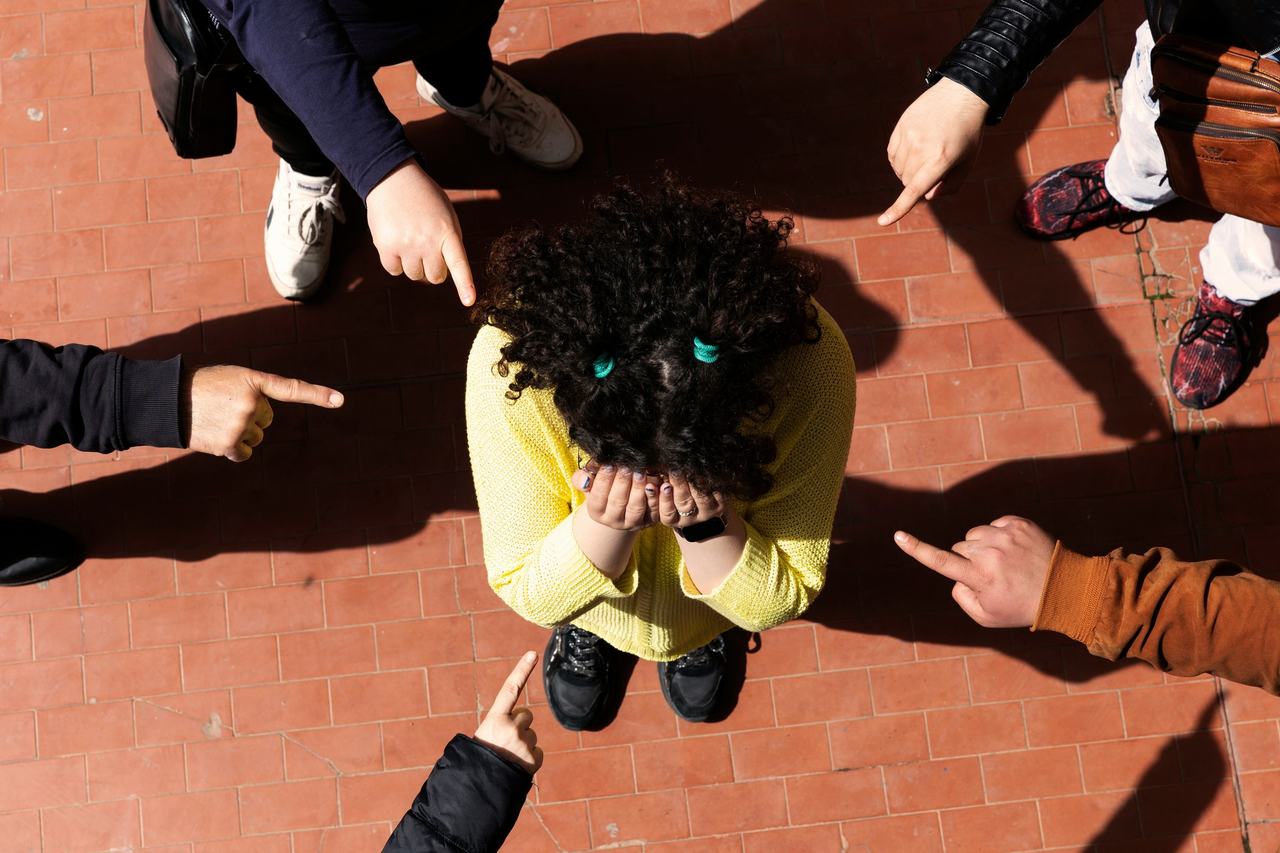
Peer violence is a situation in which a group of young people:
regularly directs hurtful behavior toward one person
has an advantage — they are more numerous, more popular, have the "class voice", access to private content
intentionally seeks to humiliate, hurt or exclude
It can look like this:
name-calling, nicknames, comments about appearance, orientation, origin
exclusion ("nobody sits with you", "we don't add you to the group")
pushing, hitting, damaging belongings
spreading rumors, ridiculing in front of others
And now an important twist: in 2026 this almost never happens only "in class." Peer violence has a double face:
offline — school, playground, bus, yard
online — messengers, class chats, TikTok feed, Instagram groups, memes, stories
The adolescent brain does not split things into "that was real" and "that was only online." For them it is one experience: "they attack me."
What happens in the brain of a teenager experiencing violence?
Imagine a teenager who wakes up with the thought "what will happen today?"
Before leaving home, they already see on their phone:
comments under yesterday's photo
a meme edited with their face
a message "nobody wants you here"
Then school:
laughter in the corridor as they pass
someone takes their backpack, uploads a video to the group
in class no one wants to sit next to them
This is not a single incident. It is a daily state of threat.
In such a reality the teenager's brain:
switches to "alarm" mode: the nervous system is tuned to searching for threats
the body reacts with tension, stomachaches, palpitations, sleep problems
emotions become harder to regulate: outbursts, crying, withdrawal into the room occur more easily
The organism does exactly what it should do when it perceives chronic threat. The problem is that this "threat" is their own class, their own group.
Offline violence: when school stops being a place of learning
Face-to-face peer violence — the "classic" school bullying — is well described in research. We know that:
victims of bullying more often develop depression, anxiety disorders, lower self-esteem
psychological symptoms can persist long after school ends — as long-term "traces" in self-image and relationships
From a daily perspective it looks less academic and more like this:
a teenager begins to fear school: morning vomiting or stomach pain, crying, attempts to get excused
grades drop: difficulty concentrating, zoning out in class, avoiding speaking up
behavior changes: either withdrawal ("invisibility") or, conversely, aggression toward others to "preempt an attack"
When school does not respond — or responds weakly — the teenager receives a double message: "they attack me" and "adults do nothing about it." This greatly amplifies a sense of helplessness.
Online violence: hate that does not end after the bell
Cyberbullying has several features that particularly strike at a teenager’s psyche:
continuity — it lasts 24/7. There is no "break", even at night.
audience — one post can reach many people. "The whole school laughs" is not just a metaphor.
escape difficulty — the internet is everywhere: phone, computer, console.
semi-anonymity — sometimes it is impossible to clearly identify the perpetrator, increasing the sense of lack of control.
Meta-analyses of cyberbullying research show that:
victims have higher risk of depression, anxiety, low self-esteem
there are more suicidal thoughts and self-harm
psychological difficulties can persist over time, even after the violence itself ends
From the teenager’s perspective it looks like this:
they are afraid to open the app, yet cannot "stop checking"
they feel their shame is public, visible to everyone
they begin to believe: "if I disappear, they will stop laughing"
This is the point when online violence stops being "just comments" and becomes a real risk for a mental health crisis.
How peer violence translates into specific mental health symptoms
To be practical, let us go through several areas you most often see in a clinic, at home, at school.
Anxiety
Peer violence is a classic risk factor for anxiety disorders:
generalized anxiety ("I'm always afraid something will happen")
social anxiety (fear of being judged, mocked, speaking in front of others)
panic attacks (sudden episodes of intense fear with bodily symptoms)
A teenager may start to:
avoid school, meetings, turning on the camera in class
isolate in their room
say that "they can't do it", "they won't leave the house"
Depression
Bullying and cyberbullying are consistently linked in studies with increased risk of depression:
chronic sadness, low mood
loss of interest ("nothing makes me happy")
feelings of worthlessness ("they are right, I am worth nothing")
sleep and appetite disturbances
In adolescents depression often looks less "textbook":
irritability, angry outbursts
risky behavior
withdrawal into the room, scrolling as a form of escape
Suicidal thoughts, self-harm
Prolonged experience of violence, particularly when adults do not respond, can lead to:
thoughts like "it would be better if I weren't here"
planning specific actions
self-harm (cutting, burning, other ways of inflicting pain)
This is not "emotional blackmail" nor "attention-seeking." From a clinical point of view it signals that the level of suffering has exceeded what the teenager can handle alone.
Trauma-related symptoms
Severe, chronic peer violence can be traumatic:
intrusive memories of violent incidents
nightmares
avoidance of places/people that remind them of events
constant tension, hypervigilance ("scanning" the environment)
Diagnostic classifications increasingly discuss stress-related disorder symptoms associated with bullying.
When does peer violence require a psychiatric consultation?
Not every difficult situation in class means "immediately a psychiatrist." There are conflicts and single incidents that can be resolved at the level of school, family, conversation.
However, there are moments when it is worth consciously taking a further step.
Consider a psychiatric consultation when:
symptoms (sadness, anxiety, sleep problems, withdrawal) persist for more than two weeks and clearly impair functioning
the teenager stops fulfilling basic roles: skips school, gives up previously important activities
suicidal thoughts or self-harm appear
the violence continues, the school responds, but the teenager's mental state does not improve
you feel that the level of suffering is "more than we at home can bear"
A consultation is not a test of parental strength nor a "verdict on the child." It is a tool to help understand what is already happening clinically, what therapy options exist, whether pharmacotherapy is necessary, and what protective steps to take.
What can you do as an adult alongside the teenager?
It is not about immediately becoming an "inspector for violence." It is about wise accompaniment.
Believe the teenager. Instead of "you're probably exaggerating" — "I see this really hurts you."
Name the violence. This is not "teasing." This is peer violence. The name itself often changes something in the teenager's mind.
Involve the school. With the teenager's agreement, talk to the class teacher, school counselor, psychologist. The goal is safety, not public "exposure" of perpetrators.
Seek specialist support. If psychological symptoms are pronounced — use a psychiatric or psychological consultation. This is an investment in health, not stigma.
FAQ: peer violence offline and online — common questions
Is every "teasing" immediately peer violence?
No. Teenagers have the right to be different, argue, joke. We call it violence when behaviors are repetitive, one side has an advantage and the goal is harm or exclusion. If you see one person systematically targeted — it is probably no longer an ordinary conflict.
Can online violence really "destroy the psyche"?
It can put a heavy burden on it. Research shows that cyberbullying is significantly associated with depression, anxiety, low self-esteem, and suicidal thoughts. It is not "just the internet." It is a social experience the brain treats as real.
How to recognize that peer violence is seriously affecting mental health?
Watch for: persistent sadness, anxiety, sleep problems, loss of energy, withdrawal, suicidal thoughts, self-harm, worsening school performance and relationships. The longer this lasts and the more it is tied to violent situations, the greater the risk that a mood, anxiety, or stress-related disorder is present.
When to see a psychiatrist in the context of peer violence?
When symptoms are frequent, severe, last longer than two weeks and impair the teenager's daily life; when suicidal thoughts or self-harm appear; when the school's response is insufficient and the young person’s mental state does not improve. A consultation is an option, not an obligation — a tool for support, not a judgement.
If in the history of the teenager you have in front of you you recognize many of these elements, you can:
start with a conversation — calm, unhurried, curious rather than judgemental
consider an online or offline consultation with a specialist who will look at the whole picture: violence, psychological symptoms, family resources, school possibilities
This text is not medical advice. It is a first step — naming offline and online peer violence as a real burden to a teenager's mental health and showing that you do not have to face it alone.
Sources
American Psychiatric Association:
Diagnostic and Statistical Manual of Mental Disorders. DSM-5-TR.
American Psychiatric Association Publishing, 2022.World Health Organization:
International Classification of Diseases 11th Revision (ICD-11).
World Health Organization, 2019.Nickerson AB:
Traditional bullying and cyberbullying in the digital age and its associated mental health problems in children and adolescents: a meta-analysis.
Annual Review of Clinical Psychology, 2024.Lee J:
Cyberbullying victimization and mental health symptoms: A meta-analysis of longitudinal studies.
Trauma, Violence, & Abuse, 2025.Kwan I, Dickson K, Richardson M, Thomas J:
Cyberbullying and children and young people's mental health: A systematic review.
BMC Psychiatry, 2020.Rydzewska A:
Peer violence at school. Legal issues.
Kazimierz Wielki University, 2019.