
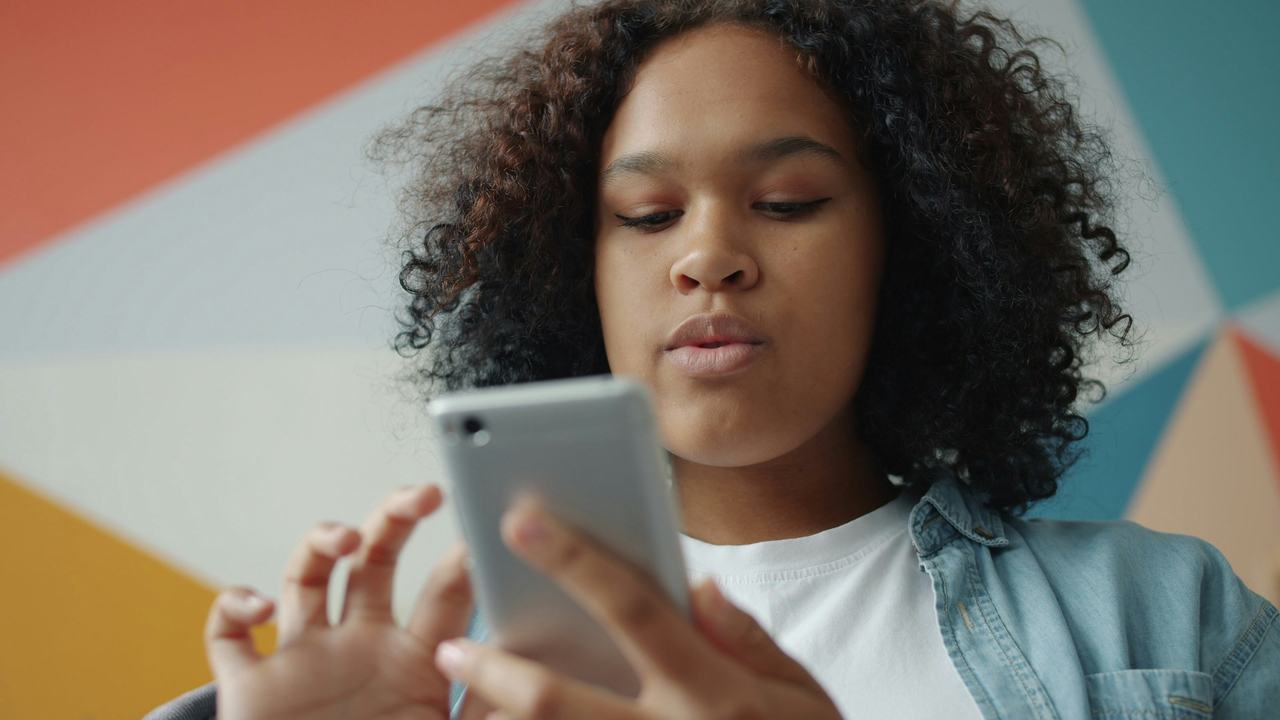
Phone and social media addiction — how to recognize that a young person is really hooked
Do you have a teenager at home who practically never lets go of their phone? Scrolling TikTok at breakfast, playing something at lunch, and at dinner saying they are "just finishing an episode" on the phone? The line between the "norms of the 21st century" and phone and social media addiction is thin — but it exists. That's what we'll talk about.
I want to show you concrete everyday signals that, according to current reviews and studies, fit the picture of problematic, addictive phone use — not just "liking the internet." No scare tactics, but also no trivializing with "all teenagers are like that."
Is it still "normal use" or already addiction?
Phone, social media, games — these are part of teenagers' world today. The goal is not to pull them out of it, but to notice when they're no longer using it and are instead being pulled by it.
In literature on behavioral addictions, the problem usually starts when:
they lose control over screen time — it was supposed to be "a moment," but it becomes several hours, day after day;
they use it despite visible consequences — worse grades, sleepless nights, family conflicts, but they still don't cut down on phone use;
when you try to set limits, the reaction resembles withdrawal — aggression, crying, panic, intense anxiety, as if you're taking away something essential for survival.
In plain terms: if it feels like the phone has your teenager, rather than your teenager having the phone — it's worth a closer look.
Phone addiction — visible signs
Polish educational materials and research on so‑called phone addiction (phonoholism) list several recurring signals. This is not a self‑diagnosis checklist, but points that may guide you.
1. Constant need to be "by" the phone
Notice whether the young person:
practically never parts with the phone — has it with them at home, in the bathroom, while eating, at night;
feels clear anxiety when the battery is low, there is no internet, or there's a temporary loss of signal;
compulsively checks notifications, even if the phone did not signal any new message;
interrupts conversations, studying, or other activities to "quickly reply" or "just see what's happening."
This is not yet a diagnosis, but a pattern: whenever there is a gap in time, it is automatically filled with the screen.
2. Reaction to limits — like withdrawal
One of the most worrying signs is how a teenager reacts to attempts to set boundaries. If:
strong irritability, aggression, crying appear when the phone is put away,
the young person hides the phone, uses it secretly, lies about screen time,
you suggest a "break from the phone" and the reaction resembles a panic attack — stomach pain, heart palpitations, trembling hands, intense anxiety,
then rather than mere "habit" we are talking about withdrawal‑like symptoms, well described in the literature on problematic digital media use.
3. Neglecting duties and relationships
In behavioral addictions a common denominator is that one activity gradually crowds out other areas of life. Consider whether you notice:
a clear decline in academic performance, reduced concentration, postponing study "for later" that never comes,
neglecting household responsibilities — simple things they used to do are now "too much" because "there's no time",
reduced in‑person contacts — meeting peers offline less often, most relationships shifting to chat and social media.
This isn't about a single "bad semester." It's about a trend: the more phone, the less life outside it.
Social media addiction — when scrolling becomes a compulsion
Social media are not only communication tools — they are designed to keep us as long as possible. It affects young people especially strongly. In studies on social media addiction several typical symptoms are described:
total preoccupation — thoughts revolve around what's happening on TikTok, Instagram, Snapchat; the teenager plans their day around "being online";
high tolerance — to feel "satisfied" they need increasing time in apps; half an hour is long gone;
withdrawal symptoms — irritability, anxiety, tension when unable to log in to a favorite service;
conflicts and withdrawal — arguments at home about the phone, isolation from family, refusing offline activities because "I prefer to be online."
Plainly: if scrolling is the main way to regulate mood — for boredom, stress, anger, sadness — and life feels impossible without it, it's a sign social media have become more than entertainment.
What current reviews say — without labeling, with attention
Reviews on "virtual addictions" in children and adolescents point out that problematic phone and social media use most often co‑occurs with other difficulties: anxiety, low mood, relationship problems, attention disorders.
Several points are emphasized:
the number of hours alone is not enough for diagnosis — what's important is how those hours affect functioning (school, sleep, relationships, physical health);
withdrawal symptoms (intense anxiety, irritability, headache, tension when you take away the phone) are among the stronger indicators of a problem;
when assessing the situation consider context — is the phone an escape from a difficult situation (e.g., peer violence, depression, anxiety), or the main source of those difficulties.
This matters because the goal isn't to "take the phone away at all costs," but to understand why the phone is being clung to so tightly.
What you can do if you see these signs in your teenager
This text does not replace individual medical or psychological consultation. It is not an advertisement for a specific service. It is meant to help you name what you see and suggest steps to consider.
Some directions:
Start with conversation, not prohibition. Ask "what does the phone give you?", "what would happen if you had a day without it?" instead of immediately saying "from tomorrow we limit it."
Look at overall functioning. Sleep, study, relationships, mood, physical activity — the phone is often the tip of the iceberg.
Consider consultation with a child and adolescent psychiatrist or psychologist if symptoms intensify and home attempts end in major escalations of conflict, aggression, or withdrawal. Online or in‑person — it's useful to have an outside perspective on the whole situation.
In the clinic we can calmly separate: what is developmental norm, what is a way of coping with emotions, and where the pattern of addictive phone and social media use begins. I see the person as a whole — and in that whole there is both the young person and the parent with their helplessness.
Sources:
Patient Guide: Digital addiction, real help – Narodowy Fundusz Zdrowia, 2025.
Virtual addiction of children — a real threat – Pacjent.gov, 2024.
Clinical descriptions and diagnostic requirements for ICD‑11 mental, behavioural and neurodevelopmental disorders – World Health Organization, 2024.
Problematic smartphone use and academic achievement: a meta-analysis of quantitative studies on youth – 2024.
Social aspects of problematic smartphone use: development and validation of a comprehensive youth scale – 2024.
The impact of social media and digital technologies on adolescents’ mental health – Annales Universitatis Medicae Silesiensis, 2025.