
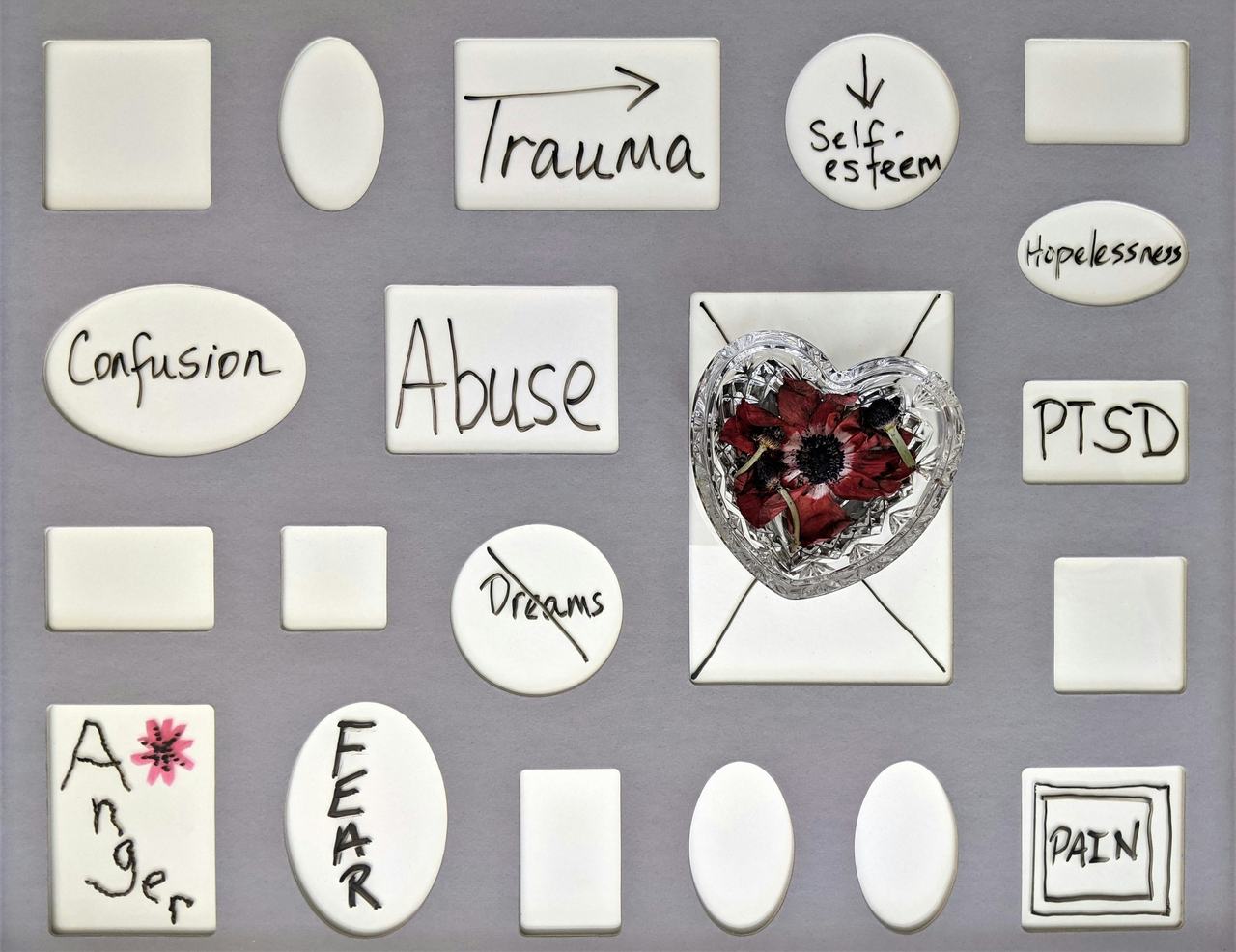
PTSD treatment — where does it really begin?
If you are reading this, it may be that:
– something difficult happened in your life
– or you see someone close suffering
– or you just want to understand
And it's good that you're here.
Because treating PTSD (post-traumatic stress disorder) is not a single method or a quick fix. It's a process. And an important thing at the start: PTSD is clinically treatable — symptoms can decrease significantly and functioning can improve, but the path looks different for each person.
It's not just about "working through the trauma." It's about rebuilding a sense of safety — in the body, in the mind and in relationships.
What does PTSD therapy involve?
The best researched and recommended forms of PTSD therapy are so-called trauma-focused therapies.
That is, approaches that help you gradually come to terms with what was too difficult.
EMDR — when the brain "reprocesses" the trauma
EMDR (Eye Movement Desensitization and Reprocessing) sounds technical, but the idea is simple:
Your brain hasn't "processed" the traumatic experience and it is still active — as if it is happening now.
During EMDR:
– you return to the memory in a controlled way
– at the same time you engage attention (e.g. eye movements)
– the brain starts to "reorganize" the experience
In practice many people say something like:
"The memory is still there, but it no longer overwhelms me."
TF‑CBT — working with thoughts, emotions and bodily reactions
TF‑CBT (trauma-focused cognitive behavioral therapy) helps you see:
– what thoughts arose after the trauma ("the world is dangerous", "it's my fault")
– how they affect emotions and the body
– how they can be gradually changed
It's a very structured form of therapy — for many people it provides a sense of control.
Do I have to "tell everything from the start"?
This is a common concern.
No — PTSD therapy is not about "dumping everything at once."
The pace is adapted to you. Safety is more important than speed.
Medications for PTSD — when are they needed?
Medications are not the only route for treating PTSD, but in many cases they provide important support.
The most commonly used are:
– SSRIs (e.g. sertraline, paroxetine)
– SNRIs (e.g. venlafaxine)
Why?
Because PTSD is not just memories — it's also:
– hyperarousal of the nervous system
– sleep problems
– strong anxiety and tension
Medications can:
– reduce symptom intensity
– make participation in therapy easier
– improve sleep and emotional regulation
Important: medications do not "remove the trauma", but they can create conditions in which psychotherapy works more effectively.
A safe environment — an often overlooked, key element
This is a point that is sometimes underestimated.
You cannot effectively treat PTSD if:
– you are still in a dangerous situation
– your environment invalidates your experience
– you don't have space to regenerate
Safety is not only the absence of physical threat.
It is also:
– predictability
– supportive relationships
– lack of constant overload
Sometimes the first step of treatment is not therapy at all — but creating conditions where therapy can actually work.
How to help a person with PTSD?
If someone close to you struggles with PTSD, you may feel helpless.
And that is very human.
What really helps:
– listening without judgment
– not forcing them to talk
– stability ("I'm here, you don't have to prove anything")
– encouragement to seek professional help — without pressure
What to avoid:
– "you need to pull yourself together"
– "others have it worse"
– "that happened a long time ago"
Trauma doesn't follow the calendar.
Can PTSD be cured?
A better question is: can you live well despite the experience?
Research shows that:
– appropriate therapy significantly reduces symptoms
– many people regain a sense of control over their lives
But this is not a race.
It's a process of rebuilding — step by step.
When should you consider a consultation?
Consider contacting a specialist if:
– symptoms persist for more than a month
– you avoid situations that remind you of the trauma
– you have problems with sleep, concentration
– you feel constant tension or numbness
This does not have to be a "forever" decision.
It can simply be a first step to check what next.
FAQ — PTSD
Can PTSD be treated without medications?
Yes, in many cases psychotherapy alone (e.g. EMDR, TF‑CBT) is effective. Medications are considered individually — especially with severe symptoms.
How long does PTSD treatment last?
It is very individual. Trauma-focused therapies can last from several months to over a year, depending on history and symptom severity.
Is EMDR safe?
Yes, EMDR is recommended in international guidelines (WHO, APA) as a safe and effective method for PTSD treatment.
How to help someone with PTSD at home?
The most important things are a sense of safety, patience and no pressure. It is also helpful to support finding professional help.
Sources
– World Health Organization (WHO). Guidelines for the management of conditions specifically related to stress.
– National Institute for Health and Care Excellence (NICE). Post-traumatic stress disorder (NG116).
– American Psychiatric Association (APA). Clinical Practice Guideline for the Treatment of PTSD.
– Lewis C. et al. (2020). Psychological therapies for post-traumatic stress disorder in adults: systematic review and meta-analysis.
– Cusack K. et al. (2016). Psychological treatments for adults with PTSD: A systematic review and meta-analysis.
– Hoskins M. et al. (2015). Pharmacotherapy for PTSD: systematic review and meta-analysis.