
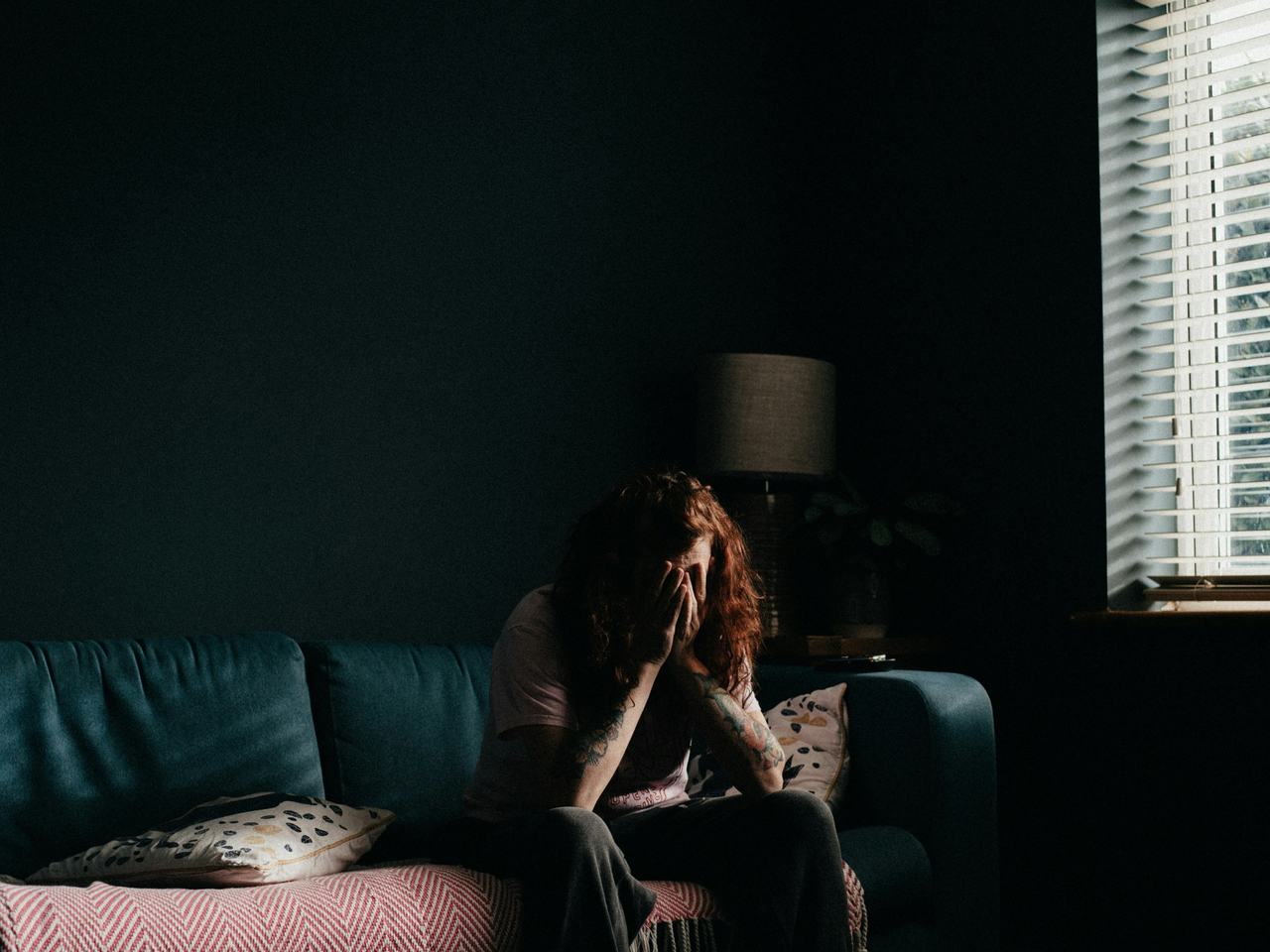
Why can’t the body “let go” after work?
Theoretically: you leave the office, close your laptop, log out of systems. Practically: your head is still running like you’re in a meeting, your body feels constantly tense, and thoughts keep circling around work long after the day should have ended.
You may want to calm down after work very much, but your body seems not to have received that information. You know intellectually that you’re “off the clock”, yet it’s hard to switch from action mode to rest. This isn’t a sign that there’s something “fundamentally wrong” with you. It’s more likely the result of how your nervous system has learned to function under prolonged stress at work and after work — often over years.
Problems winding down after work — what’s actually happening?
Let’s start with the fact that body and mind don’t operate in two separate files. If for most of the day your system functions in “I act, I manage, I respond” mode, there’s no magical “OFF” button when the day ends.
You might experience:
coming home while your mind is still replaying emails, conversations, conflicts,
feeling tension in your neck, jaw, abdomen even though “nothing is happening” anymore,
finding it hard to sit down and simply rest because a feeling pops up that “you should still do something”,
reaching for your phone in the evening “just for a moment”, only to realize two hours have passed and you feel even more overstimulated.
These are typical signs that the nervous system is still operating as if you were at work, even though the calendar says otherwise.
Constant tension after work and the nervous system — why doesn’t the body know it’s “all over”?
In broad terms:
action mode is dominated by mechanisms linked to the sympathetic nervous system (the one that kicks in when you need to act, react, meet deadlines),
rest and recovery depend on the parasympathetic nervous system (the one that allows the body to slow down, “digest” the day, repair itself).
If you spend many hours a day in a heightened mobilization state — even if it’s not dramatic stress but constant “being on alert” — the body starts treating this as the new normal.
A typical illustrative example:
throughout the day you receive many stimuli — emails, meetings, messages,
you often place high demands on yourself (and sometimes others), so tension also builds internally,
there are few moments when the body receives a clear signal “you are safe”.
In the evening you physically leave work, but:
the nervous system arousal level is still high,
muscles are habitually tense,
breathing is shallow,
the brain still scans the environment for “what else do I need to do”.
The body therefore doesn’t recognize leaving work as a moment when it can “let go”. It rather sees another list of tasks (home, children, private matters) and automatically maintains the same mode of operation.
Why can’t I calm down after work even though the day has long ended?
Usually several layers converge here.
1. The habit of thinking about work after work
If for years after work you have returned in your mind to “what could I have done better”, “what else do I need to deliver”, your brain has learned that evening = time for analysis and worrying.
This isn’t a conscious decision. It’s more an automatic script: “it’s relatively quiet now, finally I can process everything”.
2. Beliefs about work and rest
Often underlying beliefs include:
“a person’s worth is measured by productivity”,
“rest must be earned”,
“if I let go, everything will collapse”.
From that place it’s hard to allow your body and mind a real “OFF”, because rest itself becomes a stressor. It’s not that you don’t know how to rest. A part of you can be very uneasy about allowing rest.
3. Lack of day‑closure
Without a ritual to close the workday the brain tries to close it elsewhere — usually in the evening, in bed, in the shower, or in conversations with loved ones.
If you end the day “on the run”, with the sense that a million things are hanging in the air, it’s natural that your head tries to sort them out when there’s even a little space.
4. Micro‑stimuli that pull you back into work
Even one “quick” check of email, a message on a communicator, or a work document late in the evening can kickstart the whole mechanism again. The body receives the message: “we’re back in the ring”.
Work stress that “comes home with you” — common patterns
Many people have similar experiences. A typical pattern might look like this:
you come home and immediately continue with tasks: shopping, children, housework. There’s no “in‑between” moment in which the body can catch its breath,
in the evening you try to relax with series, social media, snacks — it gives temporary relief but doesn’t “teach” the nervous system to switch to rest,
it’s hard to fall asleep at night, you wake up tired, and the next day the cycle starts again.
This isn’t laziness or lack of competence to rest. It’s a nervous system that constantly receives signals to “stay alert”.
Beliefs about work and rest that block letting go
Some beliefs are so deeply internalized that we don’t even notice them. Typical examples might be:
“As long as I have the strength to stand, I can still do something.”
“If I let go, others will think I’m not committed.”
“First duties, then pleasures — except duties never end.”
This means that even if the body signals “I’m tired, I need a break”, the mind overwrites it with: “you can hold on a bit longer”. Over time the body makes these requests for rest louder — in the form of chronic tension, difficulty winding down after work, and physical symptoms (headaches, stomachaches, heart palpitations).
How to switch from action mode to rest — first steps
Important: this isn’t about an ideal “successful person’s routine”. It’s about small, realistic things that send the nervous system the signal: “it’s okay to relax here”.
Small ritual to end work
Instead of ending the day “on the fly”, you can introduce a simple ritual (5–10 minutes):
write down what you did today — even small things,
note 3–5 most important tasks for tomorrow,
physically close your computer, notebooks, browser tabs.
This won’t solve everything, but it gives the brain a sense that matters are “parked” rather than abandoned.
Physical transition between work and home
The nervous system responds well to bodily signals. You can:
walk one extra stop,
do 3–5 minutes of simple movement at home: stretches, shoulder circles, a few deeper bends,
change into more comfortable clothes right after you get home — a small but clear signal: “different context, different rules”.
It’s not about a perfect workout. It’s about marking the end of work.
Micro‑breathing switch
A simple practice that often helps reduce evening tension:
set a timer for 1–3 minutes,
breathe calmly so that the exhale is a bit longer than the inhale (e.g. inhale to 4, exhale to 6),
notice where you hold tension in the body (jaw, shoulders, belly) and try to “let go” there a little.
It’s not a magic technique, but it can be a first step to get the body off the highest gears.
Agreed boundaries with work
If it’s possible in your situation:
set a time until which you are “available for work”,
after that time don’t check emails, messengers, or documents,
if that’s too much at first, start with one evening per week without work after a certain hour.
This teaches the nervous system that there are parts of the day when it really doesn’t have to be on “standby”.
Rest that’s “good enough”, not perfect
Give yourself permission to rest in a way that isn’t Instagram‑perfect. It won’t always be meditation, a bath and yoga. Sometimes it will be 20 minutes of quiet with a cup of tea, a short conversation with someone with whom you don’t have to prove anything, or an ordinary walk.
You can ask yourself:
“What makes me feel even a little more space in my body and mind?”
Instead of: “Was that a sufficiently productive rest?”
What helps the nervous system let go after work (movement, breath, boundaries)
In short, your nervous system is best supported by:
Regular, gentle movement — walks, light exercise, dancing at home. It’s not about athletic results but giving the body a chance to discharge some tension.
Conscious breaks from stimuli — even 15–20 minutes daily without scrolling, emails, or videos. At first this may feel uncomfortable — that’s normal.
Simple regulation techniques — breathing, grounding contact with the body (e.g. noticing your feet on the floor, your back against the chair), short grounding exercises.
Boundaries around work — ones you can realistically keep in your situation.
You don’t have to implement everything at once. Sometimes a very specific small step, repeated regularly, makes a tangible difference.
When routine changes alone aren’t enough and it’s worth seeking support
Consider consulting a doctor, psychologist or psychotherapist if:
problems winding down after work and constant tension have lasted for many weeks or months,
sleep is clearly disturbed (difficulty falling asleep, frequent awakenings, fatigue despite sleep),
symptoms of anxiety appear (heart palpitations, shortness of breath, panic attacks),
symptoms of depression appear (loss of energy, loss of joy, sense of meaninglessness, difficulty performing daily tasks).
You have the right not to manage all of this on your own. Talking to a specialist does not take away your competence; it can help you see other options besides “grit your teeth and endure”.
If you see yourself in this text, you might consider a consultation — online or in person — with a doctor or psychotherapist. Decisions about diagnosis, treatment, and next steps are best made together, taking into account your specific situation.
FAQ — problems winding down after work
1. Why can’t I calm down after work, even when I’m not doing anything?
Often this happens because the nervous system has stayed in mobilization mode all day and after work doesn’t receive clear signals that “it’s over”. Added to that are habits of thinking about work after work and beliefs that you must always be on alert.
2. Where does the constant tension after work come from?
Constant tension after work can be the result of chronic stress, lack of rituals to close the day, overload of responsibilities at home and work, and the fact that the body has no space for regeneration. It’s not only “in your head” — the nervous system really behaves as if something important is always happening.
3. How to switch from action mode to rest after work?
Small, concrete steps help: a ritual to end work (summary, plan for tomorrow), a moment of movement after work, a few minutes of calm breathing with a longer exhale, and setting a time after which you don’t return to work tasks. Repetition, not perfection, is key.
4. Do problems winding down after work mean I “don’t know how to rest”?
No. Usually they mean your nervous system is overloaded and has learned over time that work and readiness are more important than rest. The ability to rest can be rebuilt gradually — often more easily with support.
5. When is it worth seeking professional help for problems winding down after work?
When tension and stress after work affect sleep, mood, relationships or daytime functioning, or when symptoms of anxiety or depression appear. That’s a good time to talk with a doctor, psychologist or psychotherapist and plan next steps together.
This text is for informational purposes and does not replace individual medical consultation or psychotherapy. Decisions about diagnosis and treatment should be made together with a specialist.
Sources
Centralny Instytut Ochrony Pracy – Państwowy Instytut Badawczy. Stres w pracy z klientem – źródła, skutki i sposoby przeciwdziałania. CIOP-PIB, informational brochure.
SmartLunch. Excessive stress at work – what are the sources of stress? 2024.
NSZZ "Solidarność". Workplace stress – causes, effects and challenges for employees. 2026.
TwojCzas Psychoterapia. How to cope with stress and emotional tension? 2026.
Business Insider Polska. Overstimulation at work. How to deal with it? 2024.
OsteoMedic. How tension in the body “remembers” stress and trauma? 2025.
MindHealth, Sensum, other psychoeducational materials concerning emotional tension, occupational stress and ways to regulate the nervous system.


